
The Stack Elon Doesn't Own
The case for terrestrial solar SpaceX accidentally made in the S-1

As a new substacker, I find myself quite surprised at how quickly this little exercise in personal brand development has brought new opportunities my way. Writing and storytelling has connected me with founders, provided a great creative outlet, brought a sense of personal satisfaction, and, in general, has given me real direction during this period of “funemployment”.
In an effort to capitalize on this traffic, I thought of coming up with my own SpaceX valuation as I am the type of freak for whom time just flies when going through financial statements and spreadsheets. I had a unique thesis I could explore, I created a LinkedIn post teasing my upcoming article, and even spent several hours building out my model. But when it came time to actually write something, like Natasha Bedingfield — shout out to those who get this reference — I stared at that blank page before me, completely paralyzed.
I couldn’t bring myself to care about the SpaceX IPO. The biggest story in business news, the largest IPO in history, Elon’s now the world’s first trillionaire, and I couldn’t sit here sycophantically making a “devil’s advocate” contrarian article about why the present valuation does make sense, but at least where the original $135/share price came from. Besides, I did enough corporate shilling in my last piece for The Panic Attack — The Ferrari Luce Isn’t a Mistake. It’s a Decision.
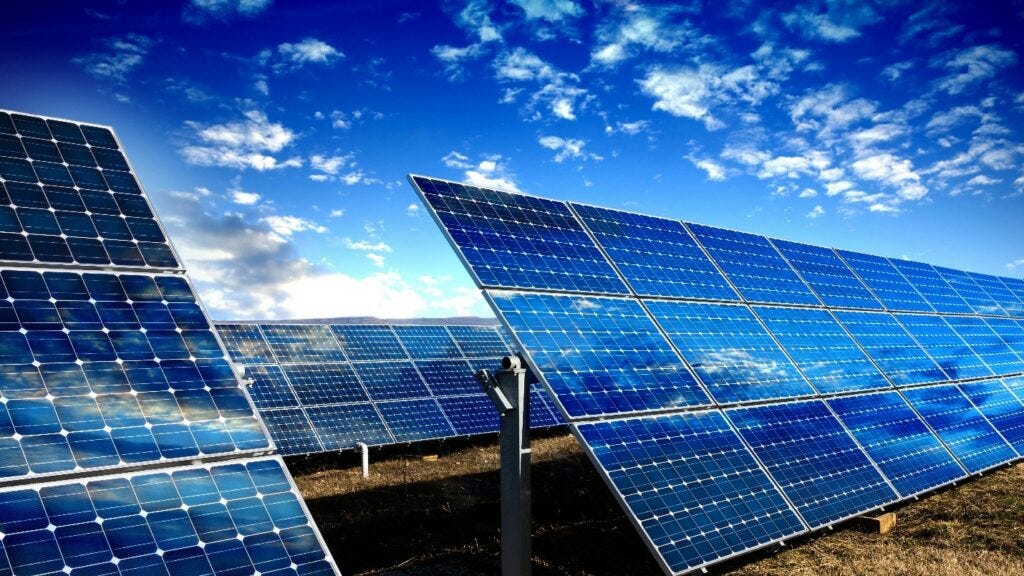
We can sit here and argue until we are blue in the face whether SpaceX’s “near-monopolistic” synergy of its launch business, satellite connectivity infrastructure, and AI technology will one day generate the future cash flows needed to justify closing out its opening trading day at a valuation that is 112x its revenue. But it’s not a monopoly! Even if you buy Musk’s claim that he is the undisputed leader in AI and Space Launches and Satellite Communications, the whole strategy is powered by solar. You can’t say that your valuation is justified because you own the whole tech stack while not owning the whole tech stack.
Go straight to the horse’s mouth. On page 4 of its S-1 filing, the mandatory SEC document that needs to be filed before an IPO, SpaceX says:
“…AI’s ability to revolutionize human potential is directly dependent on meeting exponentially increasing resource demands. On Earth, the massive expansion of data center capacity to support growing compute demand is significantly outpacing electricity generation, which was effectively flat in the United States for approximately 15 years, growing at a compound annual growth rate of 0.1% from 2008 to 2023. Despite the recent increase in electricity demand from AI data centers, electricity generation in the United States has grown at an annual rate of less than 3% between 2023 and 2025, while electricity generation in China has grown at approximately twice that rate in the same time period. This supply and demand imbalance is already imposing unsustainable strains on terrestrial power grids, supply chains, and the environment. The Sun contains approximately 99.8% of the solar system’s energy and, as a result, we believe it is the only truly scalable solution to terrestrial energy constraints in the age of AI.”
In other words: SpaceX just made the bull case for terrestrial solar, buried in its own IPO filing.
So what’s the issue? It’s what comes next.
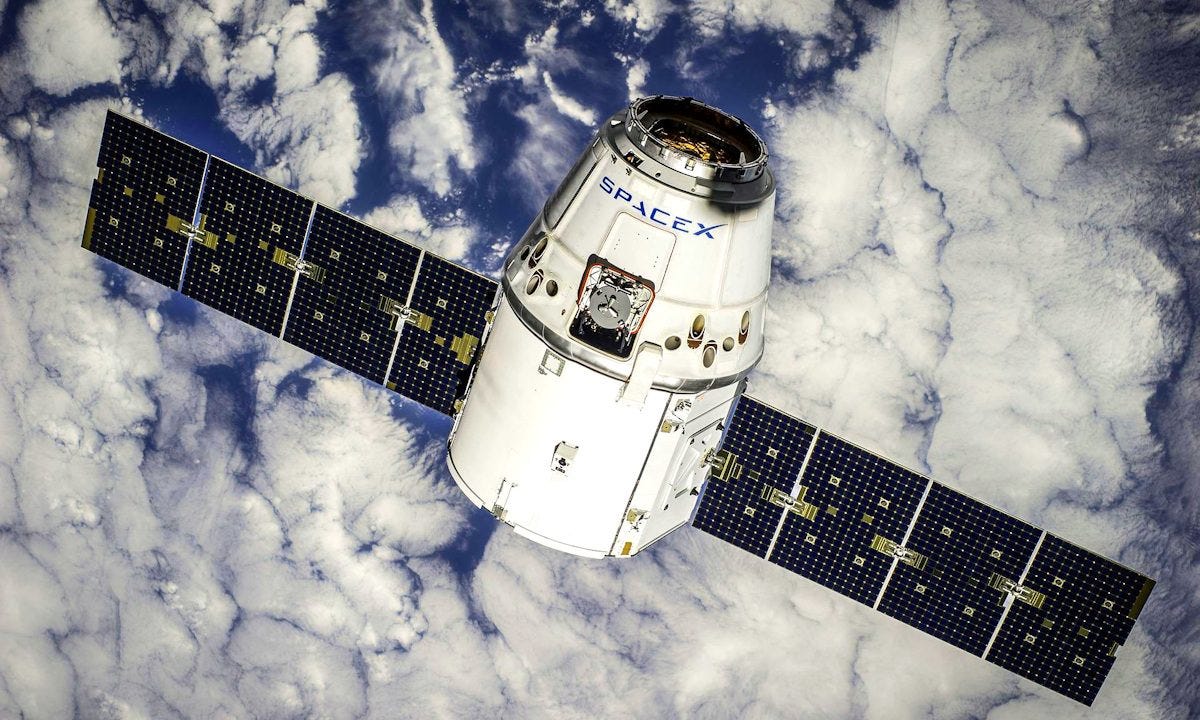
“Harnessing this energy in space is considerably more efficient than on land. Space-based solar arrays can generate more than five times the energy per unit area of terrestrial solar due to continuous illumination, lack of atmospheric interference, and optimal orientation. SpaceX is well-positioned to capture this space-based solar energy through our ability to rapidly access Sun-synchronous orbit through our satellite manufacturing scale and launch capability. As a result, we are expanding our footprint and harnessing the vast resources of space that are essential to sustaining technological development. Our goal is to ensure that AI becomes a force for human flourishing and a benefit to civilization, rather than a catalyst for terrestrial resource depletion and instability.”
SpaceX spends a full paragraph carefully explaining why our current AI energy appetite is unsustainable and why solar is the only scalable answer. But then, with one handwave, it teleports the problem off the planet.
I can see where they are coming from. Terrestrial solar, with all its messy interconnection studies, permitting fights, and NIMBY hearings, probably can feel impossible to program. I personally have a background in energy resilience, maintaining uptime requirements, and programming Air Force energy infrastructure upgrades. Moving the needle on real‑world electrons is slow, political, and often thankless.
But wrangling uncooperative stakeholders and making unwelcome phone calls is not — and I mean this literally — rocket science. With its $5 billion net loss in 2025, SpaceX is certainly no paragon of lean manufacturing; and solar panels in space may be five times as efficient as those on Earth, but we’re hardly running out of large tracts of desert land in Texas and Arizona.
What should we be excited about instead?
For starters, the American solar industry is quietly having one of the most consequential decades in the history of energy. Yet, almost nobody seems to notice.
Consider the numbers. Solar accounted for 54% of all new electricity-generating capacity added to the U.S. grid in 2025 and has remained the primary new source of power generation for the past five years. Cumulative U.S. solar capacity now stands at 279 gigawatts, and the SEIA and Wood Mackenzie project it will nearly triple to 769 GW by 2036. The installed cost of a typical utility-scale solar system has fallen from roughly $5,310 per kilowatt in 2010 to an estimated $620 per kilowatt in 2025, a nearly 90% reduction, and BloombergNEF projects a 30% decrease in the levelized cost of solar electricity by 2035. In fifteen years, solar went from the most expensive option on the grid to the cheapest new generation source in the country. We didn’t do that with rockets. We did it with glass, aluminum, and a lot of boring, grinding, incremental cost reduction — exactly the kind of engineering work that never gets a billboard on the I-10.
And here is the part that should make everyone pay attention: for the first time in history, we finally have a purely capitalistic reason to modernize our ageing electrical infrastructure — one of the oldest in the world, with roots going back to Edison’s Pearl Street Station in 1882. For decades, grid upgrades were a political football: a line item that required elected officials to convince constituents to pay more for something invisible. Solar changes that calculus entirely. When it is cheaper to generate a megawatt of solar power than to fire up a gas peaker plant, even the most market-oriented utility exec will return developers' calls. AI data centers, which are projected to consume between 6.7% and 12% of all U.S. electricity by 2030, are the same. They don’t care about ideology. They care about uptime and cost per kilowatt-hour. And right now, solar and battery energy storage systems are increasingly winning that argument on pure economics.
The Distributed Advantage
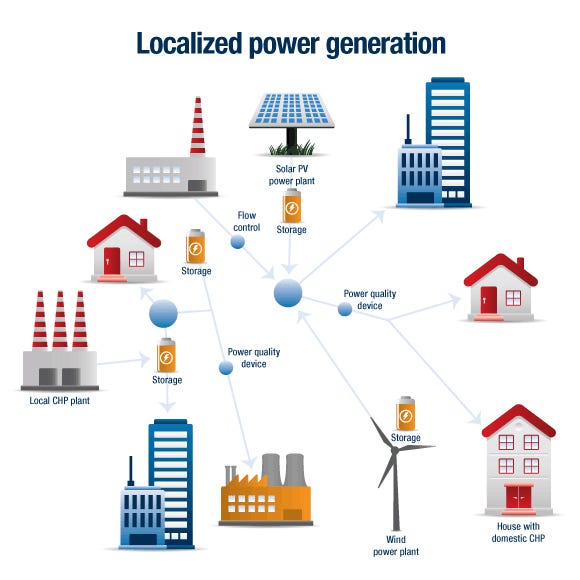
One of the underappreciated features of solar as an energy technology is that it is, by nature, distributed. A wind farm or a nuclear plant requires a single massive site, years of permitting, and regulatory approvals from a dozen overlapping jurisdictions. A rooftop installation requires a permit from a city building department and a three-day crew.
That distributed nature changes the political economy of energy infrastructure in ways that most people haven’t fully appreciated yet. When generation is closer to the customer, interconnection queues are shorter, opposition is more localized and manageable, and deployment accelerates. Community solar programs — while down 25% from their 2024 peak due to policy headwinds — have proven that you can bring solar economics to renters and low-income households who can’t put panels on a roof they don’t own. The commercial segment actually grew 6% in 2025 even as utility-scale pulled back. The distributed model is more resilient than the IPO narrative would have you believe.
So why do we think of American solar as a failed industry?
The first reason is that the industry earned its bad reputation. The early-2010s solar boom produced some genuinely predatory companies. Door-to-door sales teams that pressured homeowners into opaque lease agreements. Installers who collected deposits and disappeared. Customers left holding warranties from companies that no longer existed and solar panels that no longer functioned. In Florida alone, hundreds of homeowners were still fighting for refunds or repairs years after their installers folded. The horror stories were real, and they stuck.
But here’s the distinction that gets lost in those headlines: those were failures of business models, not failures of technology. The physics of photovoltaics kept improving on its own schedule. The panels that were installed badly kept getting cheaper and more efficient. The industry’s worst actors flamed out, and the underlying economics quietly got better every single year regardless.
But why did those half-baked companies pop up in the first place?
Beginning in 2008, Federal tax incentives, like the Investment Tax Credit, allowed homeowners and developers to deduct up to 30% of all costs associated with new solar installations. And as the saying goes, if you spill blood in the water, you will get sharks. The sales math becomes irresistible to fly-by-night installers, now incentivized to install anything as fast as possible.
What followed was roughly a decade of what the industry grimly nicknamed “the Solar Coaster.” Door-to-door sales teams, armed with company polo shirts, laminated savings projections, and zero accountability, fanned out across American suburbs chasing commissions as they signed homeowners into long-term predatory lease agreements. They used the cheapest low-grade Chinese modules available, collected deposits on projects they couldn’t finish, and offered warranties written by entities that would be dissolved before the ink dried. By the time a homeowner’s system started underperforming or failing outright, the installer had either folded, restructured under a new name, or just stopped picking up the phone.
Regulators and consumer advocates began sounding the alarm as early as 2019, with some comparing the loan tactics used to push solar adoption in lower-income neighborhoods to the subprime mortgage playbook that preceded the 2008 housing crisis. But the real reckoning came between 2023 and 2025, when roughly 100 U.S. solar companies, including household names like SunPower and Sunnova, filed for bankruptcy. Rising interest rates, policy reversals, and the compounding weight of years of overpromising finally caught up with a segment of the industry that had been running on narrative and cheap capital rather than good business. Thousands of homeowners were left with broken or underperforming systems and no one to call.
Even Elon Musk found himself entangled in the wreckage. SolarCity — once the largest residential solar installer in the country — was co-founded by his cousins and chaired by Musk himself. When it collapsed under the weight of its own aggressive growth strategy in 2016, Musk pushed Tesla to acquire it for $2.6 billion in a deal that Tesla's own shareholders later sued him over, alleging it was less a strategic acquisition than a family bailout.

A mini-interview with a founder trying to repair “orphaned” solar projects
The problem is so widespread that “Solar Rescue” has since become a viable business model in and of itself. One co-founder I interviewed, Luis Galarza of SoFlo Solar, actually pivoted out of energy-specific M&A advisory because he kept getting calls from homeowners with broken systems that were abandoned by companies he once contacted as an M&A advisor! He spoke about how, in 2021, 10 years removed from any prior experience as an engineer, got his contractor’s and electrician’s license and got to work climbing roofs and troubleshooting problematic panels! By providing honest advisory services with no sales commissions, he and his co-founder, Laura Gutiérrez, have helped over five hundred households and businesses restart long-dormant solar power generation in Miami-Dade and other South Florida townships, totaling up to 8 MW of solar generation that was already installed and paid for. Enough solar to continuously power 900 South Florida homes!
When I asked him what the most common failure point was, he said that in his five years in this business, he has only seen one actual panel failure. The vast majority of the time, it is the power electronics themselves. Simple fixes like drilling water drainage holes in junction boxes and clearing out dead lizards fried by the main-phase sort of most problems; a far cry from wearing a suit on Wall Street!
We Already Have Proof It’s Working
If you need a reason to believe in the terrestrial solar and electrification story beyond financial projections, consider what researchers at the Keck School of Medicine at USC found when they looked at California’s real-world air quality data.
Using satellite imaging, the USC team published the first statistically significant study in The Lancet Planetary Health showing a measurable drop in nitrogen dioxide (NO₂) linked directly to zero-emission vehicle adoption. For every 200 zero-emission vehicles added to a California neighborhood between 2019 and 2023, nitrogen dioxide levels fell by approximately 1.1%. Earlier USC research had already shown that even at penetration rates as low as 2%, EV adoption correlated with a 3.2% decrease in asthma-related emergency department visits. These are not modeled projections. These are observed outcomes from the real world, using satellite data, in the largest EV market in the country.
The future we are building — solar powering EVs powering cleaner air — is already arriving in the neighborhoods most affected by a century of combustion. The question isn’t whether it works. The question is how fast we build it.
This Is Our Moment
SpaceX’s S-1 is right about one thing: we are at an inflection point. AI’s energy appetite is real. The grid constraints are real. The urgency is real.
But the answer isn’t to invest billions in floating data centers in Sun-synchronous orbit. The answer is Luis Galarza and SoFlo Solar, climbing onto a Miami roof and reconnecting a broken system for which a family is still making monthly lease payments to a company that no longer exists. It’s Heron Power, rethinking 60-year-old electrical transformer designs and creating a native 800V DC platform for data centers to run more efficiently. It’s companies like Electriphi and Stable Auto building the software layer that turns commercial EV charging fleets into intelligent grid assets — turning parking lots into distributed battery storage that utilities can actually count on. These are not moonshots. This is gen 2. And just like the iPhone didn't become the portable internet device it promised to be until the 3G, gen 2 is always when the technology gets it right.
We learned hard lessons during the Solar Coaster. We watched EV charging networks get deployed without interoperability standards, leaving drivers stranded in front of broken Level 2 chargers with no recourse. We watched solar lease agreements written by lawyers who had never been on a roof. We made the mistakes that every new industry makes when it scales faster than its standards. But standards now exist —ClimateFirst Bank will only lend money for solar panels from trusted vendors, the Tesla NACS port has been opened up to 3rd parties and mandated as the universal standard for all new EV charging; the installation codes, the interconnection rules, consumer protection frameworks, the battery safety certifications — they were written in the wreckage of the first pass, and they are better for it.
We can argue the morality of AI development all day, but forces far greater than any of us will ensure it goes through regardless. We have a moral imperative to fight for every ancillary improvement we can extract from these buildouts. Sustainable and renewable energy is far too consequential an opportunity to surrender to cynicism around municipal friction or cede to science fiction. The grid that powers the AI age doesn’t have to be built the way the last one was. It can be built the right way, by people who learned from the first attempt, with economics that finally point in the right direction.